
Funders:
- Northern Territory Government Department of Health
Collaborators:
- Katherine West Health Board
- Sunrise Health Service
- Miwatj Health Aboriginal Corporation
- Charles Darwin University
- Murdoch Children’s Research Institute (MCRI)
Chief investigator:
Project coordinator:
Researchers
- Associate Professor Kayli Wild
-
Professor John Condon
HDR Students
For more information about the project, please email.
Aim:
Summary:
Between 2019 and 2024, three Aboriginal Community Controlled Health Services – Miwatj Health Aboriginal Corporation, Katherine West Health Board and Sunrise Health Service - implemented the Maternal and Early Childhood Sustained Home-visiting (MECSH) program in East Arnhem and Katherine regions of the Northern Territory. MECSH is an Australian nurse-led home visiting program developed in Sydney that was licensed to the Northern Territory Government for implementation in the NT. Implementation support was provided by Western Sydney University.
Implications for policy and practice:
The ‘NT MECSH’ model of care that emerged during the 5-year period of implementation and adaptation was valued by many parents. From parents’ perspectives, MESCH practitioners provided three areas of valued care: Emotional support, Information and educational support, and Practical care. These elements occurred within a trusting relationship between skilled practitioners and mothers. Based on parent interviews, MECSH helped to build maternal capacity and self-efficacy, to strengthen family relationships and to reduce barriers to engagement in health and social services.
Project dates:
Implementation evaluation: completed in November 2024
Impact evaluation: due for completion December 2026
Journal articles:
- Gregory A, Aquino D, Caudwell KM, Wild K, Maypilama L, Robinson G. Survey to story: exploring mixed methods administration of surveys in remote First Nations communities of the Northern Territory. Australian Psychologist 2025 (under review)
- Gregory A, Wild K, Aquino D, Robinson G. ‘They got my back’: Thematic analysis of relationship building in nurse home visiting in Aboriginal communities. Aust J Rural Health. 2024; 32: 1227–1238. https://doi.org/10.1111/ajr.13199
- Gregory A, Aquino D, Wild K, Robinson G (2023). Looking to the future: aspirations of women with young children. Partyline, Issue 85. Available at: www.ruralhealth.org.au/partyline/article/looking-future-aspirations-women-young-children
Parenting resources: Supporting partnerships with families
What is MECSH? Animation:
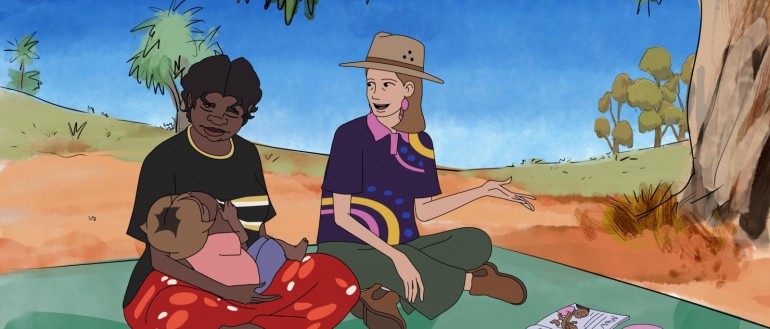
‘What is MECSH?’ is an animation to provide information to pregnant women, families, and communities about the Maternal and Early Childhood Sustained Home visiting (MECSH) program in the Northern Territory. MECSH is delivered in three remote regions of the Northern Territory by Miwatj Health Service, Katherine West Health Board, and Sunrise Health Service with funding from the Northern Territory Government. MECSH is a licensed program of Western Sydney University. The animation is also available in Yolngu Matha and Kriol for use by health services in the East Arnhem and Katherine regions.
Watch the 'What is MECSH' animation here or via the clip below.
This project received grant funding from the Australian Government.