
Menzies researcher reflects on Indigenous leadership program
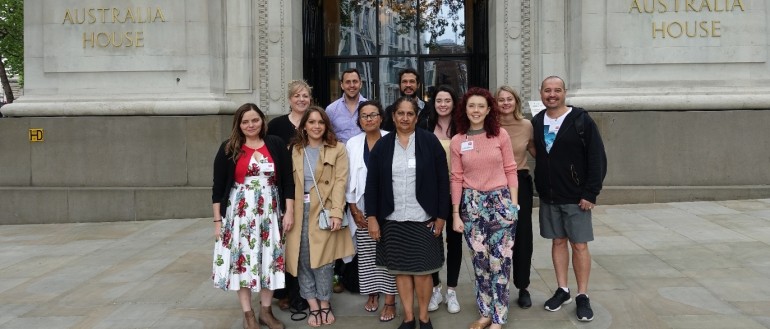
Dr Tamara Butler (third from right) shares her thoughts on the 2018 Melbourne Poche Centre for Indigenous Health’s Indigenous Leadership Fellows program.
Menzies researcher reflects on Indigenous leadership program
Dr Tamara Butler (third from right) shares her thoughts on the 2018 Melbourne Poche Centre for Indigenous Health’s Indigenous Leadership Fellows program.
The following article was contributed by Dr Tamara Butler, post-doctoral researcher with the cancer research team at Menzies' Brisbane campus.
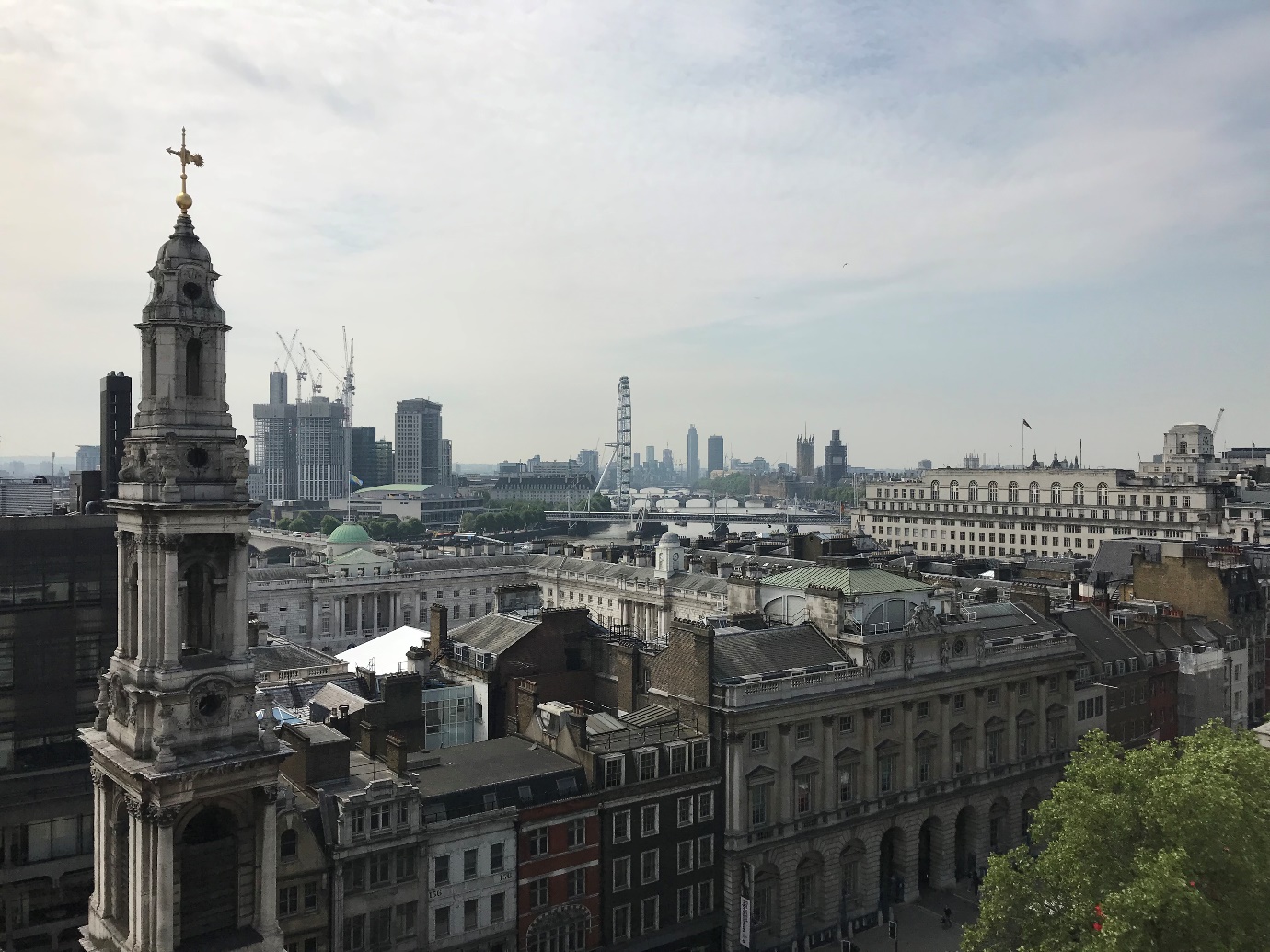
Reclaiming space in the seat of colonisation as Indigenous health leaders. Photo by Tamara Butler.
For most people, when they head north for a British summer, taking in history is part of the experience. But when I was in London recently, I didn’t expect to be part of creating history in the seat of colonial power.
Ten early-career Aboriginal and Torres Strait Islander health professionals, including myself, journeyed to London as part of the 2018 Melbourne Poche Centre for Indigenous Health’s Indigenous Leadership Fellows program. We had met with the Australian Deputy High Commissioner, Matt Anderson, at Australia House and noticed the glaring lack of representation of Australia’s First Nations people through the absence of the Aboriginal and Torres Strait Islander flags at the premises.
We raised the matter with Mr Anderson and as a result, the flags now fly proudly and permanently outside Australia House. In my mind, this place, which is Australia’s oldest diplomatic mission and the longest continuously occupied foreign mission in London, now begins to represent all of Australia’s peoples.
Though it may seem like a small gesture to some, to me, it was significant that our group of emerging Indigenous health leaders could exert our influence within the very institutions of power that historically sought to repress us – and this makes me optimistic for the future of Indigenous health leadership.
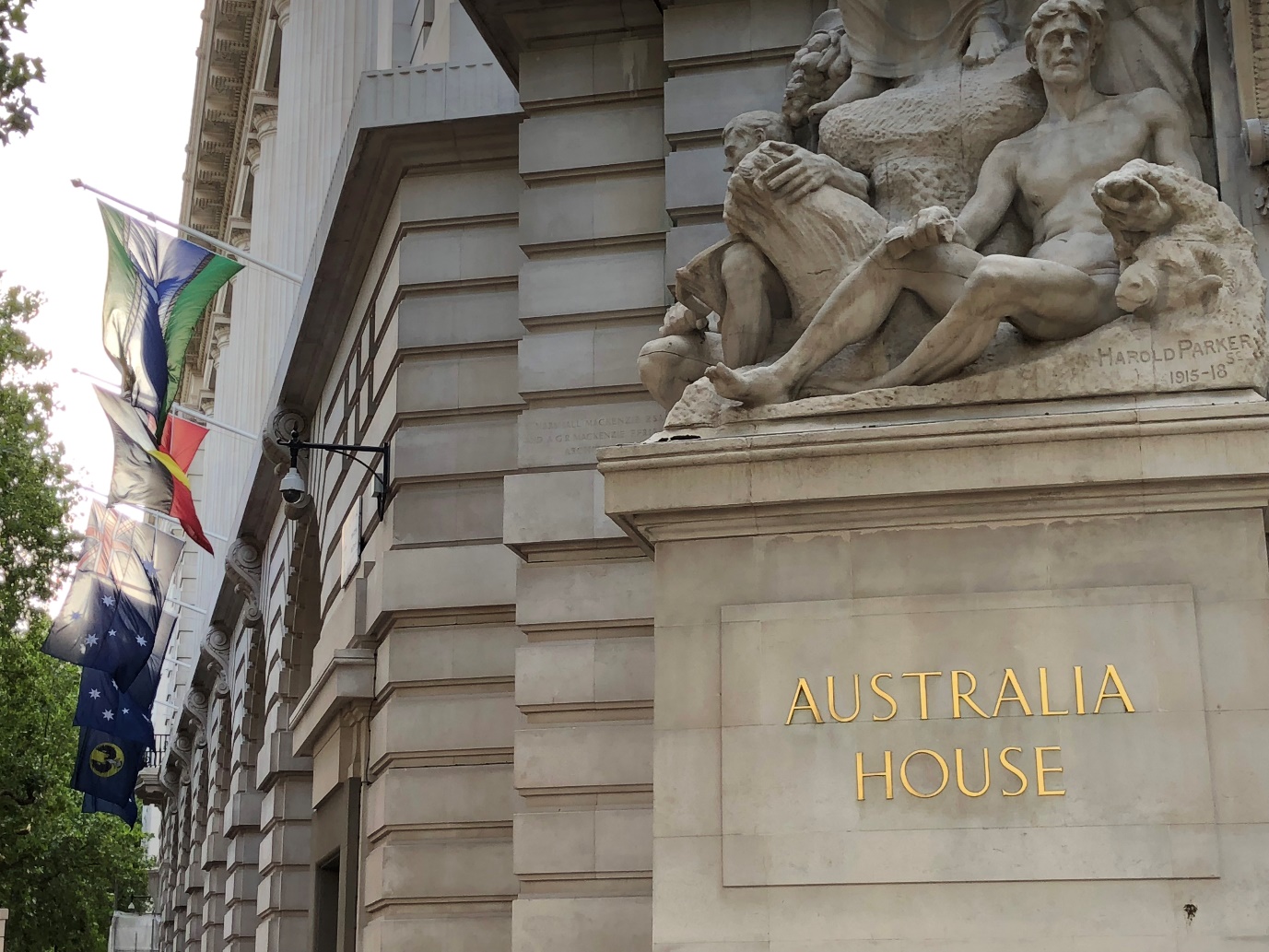
The Aboriginal and Torres Strait Islander flags are now raised outside of Australia House. Photo supplied by Shaun Ewen.
The Poche Centre for Indigenous Health Leadership Fellows Program supports the development of emerging Indigenous leaders in academic, policy, clinical and research roles across a range of health sectors. Entry to the program is highly competitive, and I was thrilled to find out I had been accepted.
Some of the key goals of the programs are building leadership networks, understanding the structures and institutions of power, and building a sense of confidence and agency in positions of leadership. I anticipated unique opportunities to meet other emerging Indigenous leaders and strengthen my own leadership abilities.
The program consisted of three modules spread throughout the year, comprising a visit to London in May hosted by the Menzies Centre for Australian Studies at King’s College, bookended by two modules hosted by the University of Melbourne, led by Melbourne Poche Director Professor Shaun Ewen and Dr Tess Ryan.
When I heard we would be visiting London, I wondered what exactly we could possibly gain through such an expensive field trip, to a destination historically hostile to our cause. I soon found that visiting the heart of the empire with Indigenous health leadership front of mind was a challenging, but ultimately rewarding and empowering experience.
Some highlights of our week-long visit to London included afternoon tea at the House of Lords with Baroness Helena Kennedy, discussions with Palawa woman Gaye Sculthorpe who is curating the Oceanic collection at the British Museum, a walking tour with author of Indigenous London, Coll Thrush, and a quick visit with Sir Michael Marmot, a key advocate for research investigating the social determinants of health.
Most of the ‘London mob’, as we called ourselves, agreed the most difficult and, simultaneously, insightful day of the trip was our visit to Oxford. There, with the support of our King’s College partners, we reconstructed the Rhodes Must Fall movement, and dined at Rhodes House with Rhodes Scholars and Charlie Perkins Scholars. The difficulty came from being in spaces of institutionalised power and systems built on the oppression of others.

The 'London mob' outside of Australia House before our meeting with Australian Deputy High Commissioner, Matt Anderson. Dr Tamara Butler is third from the right. Photo supplied by Poche Melbourne.
Despite these challenges, I found I could identify ways in which Aboriginal and Torres Strait Islander people could reclaim these places with a sense of leadership, agency and control, and I have since applied these insights in the context of my research practices back home.
A personal highlight was our visit to the School of Oriental and African Studies (SOAS), followed by a discussion about de-colonising the institution. Here, we discussed the insidious ways that colonisation influences how academia and universities operate and the resulting impact on students and staff from diverse backgrounds.
We also heard about some of the innovative work SOAS is doing to construct a more inclusive curriculum. We visited the SOAS archives to view the Dawes notebooks, which are believed to be one of the first written recordings of Aboriginal language. On the same day, we heard about the Endangered Languages Project, a worldwide initiative to preserve dying languages, including many of our own languages.
These discussions prompted me to think deeply about how the systems that surround us in academia – that rose from colonised beginnings – have shaped the way research is conducted, including the research questions we ask, why we ask those questions, who ‘holds’ the resulting data (and with what authority), and who benefits from it.
It led me further appreciate the outstanding quality of the work we do at Menzies, which has always been embedded in a deep sense of reciprocity and respect, and at its core, a vision to privilege Aboriginal and Torres Strait Islander ways of knowing, doing, and being. This has strengthened my determination to ensure that our mob benefit from the research we conduct and has reaffirmed my sense of responsibility for ensuring that the research we conduct is accessible to those who need it the most.
I strongly encourage all Aboriginal and Torres Strait Islander early-career health researchers to consider apply for the third iteration of the Indigenous Leadership Fellows program next year.
Interested parties can view a short movie about our London experience here.