
Five Themes, One Purpose
What does it take to create real impact?
That was just one of the questions uncovered in our 40th Anniversary 5-Part Research Impact Series this year.
These themed events brought together Menzies researchers and collaborators who are working across a range of areas. With a panel discussion at each event, the conversations highlighted how real-world experiences and thinking can be transferable to multiple settings to help drive change.
Event 1: Health Education and Training
Our first event of the series brought together five speakers, focused on the evaluation of co-designed models of First Nations workforce development and training to tackle childhood ear disease and hearing problems, hepatitis B workforce training in remote communities as well as those supporting career pathways, through higher education and training.
Across the conversation, the panellists shared how high-quality, culturally informed education and training are critical to supporting health. They also highlighted the need for flexible employment pathways, and how trust, visibility and self-determination were key.
The reminder that “you can’t be what you can’t see” captured the essence of the conversation: to empower the next generation of First Nations health leaders, Australia must invest in our people, providing support and opportunities.
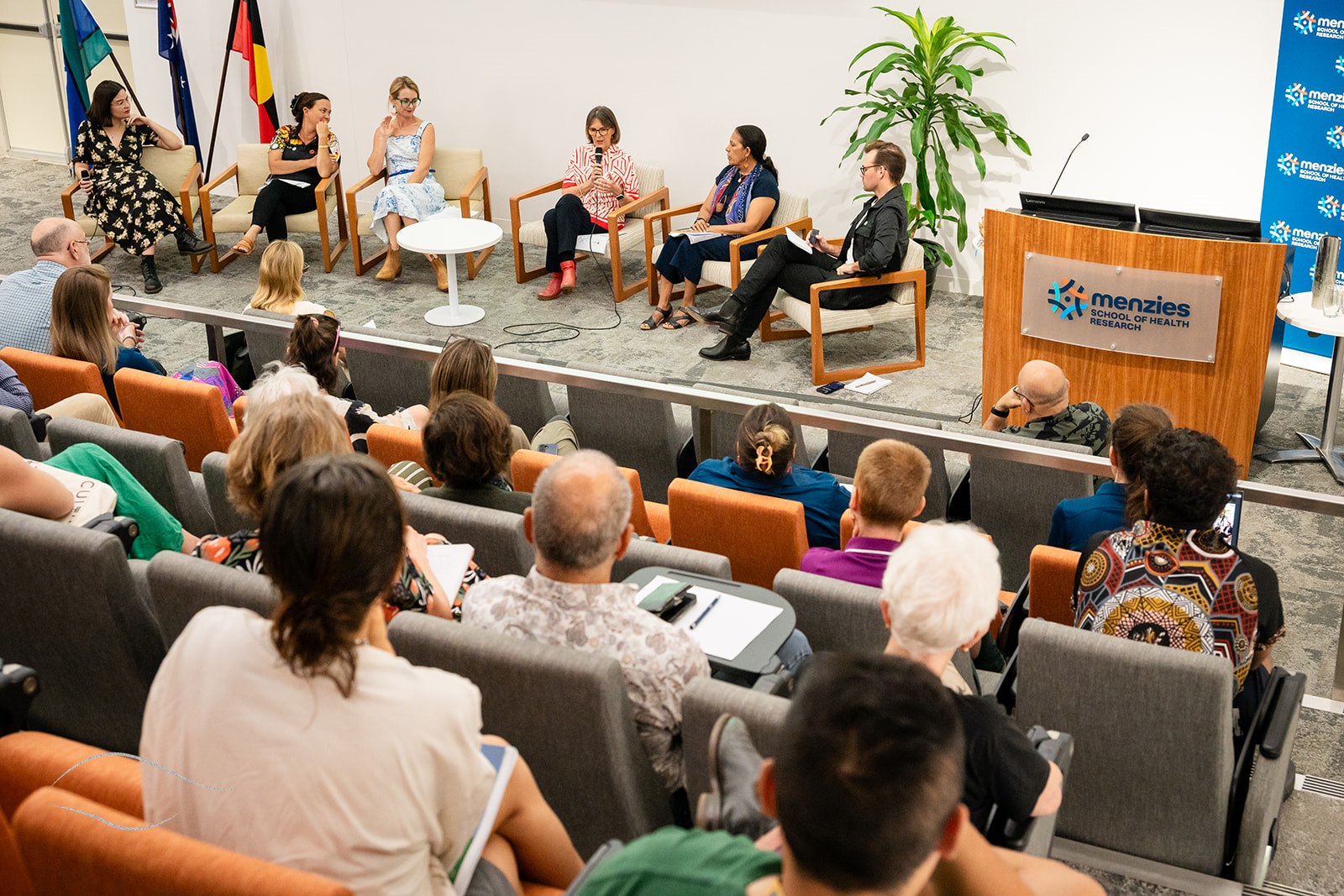
Event 2: Partnerships and Collaboration
Our second event celebrated our partnerships that ensure our research is grounded in community needs and drives meaningful change.
Dr Leisa McCarthy spoke about TEAHRA (Top End Aboriginal Health Research Alliance) and CAAHSN (Central Australia Academic Health Science Network), both which unite researchers, health services and government to champion Aboriginal-led, community-driven work.
We then heard from Tara Dias and Laura Stuart from the DIABETES across the LIFECOURSE: Northern Australia Partnership (established by Menzies’ Professor Louise Maple-Brown in 2011), whose efforts to strengthen prevention, care and knowledge-sharing continue to shape diabetes outcomes across Northern Australia.
Professor Nick Anstey and Dr Rini Poespoprodjo shared insights from the Timika-Menzies Research Collaboration. This long running partnership has been key to tackling malaria and improving population health in Papua. The collaboration speaks to the impact of the malaria program across the Asian region.
Together, these partnerships reinforced a key message: collaboration drives tangible outcomes helping to create change, shape policy and improve health.
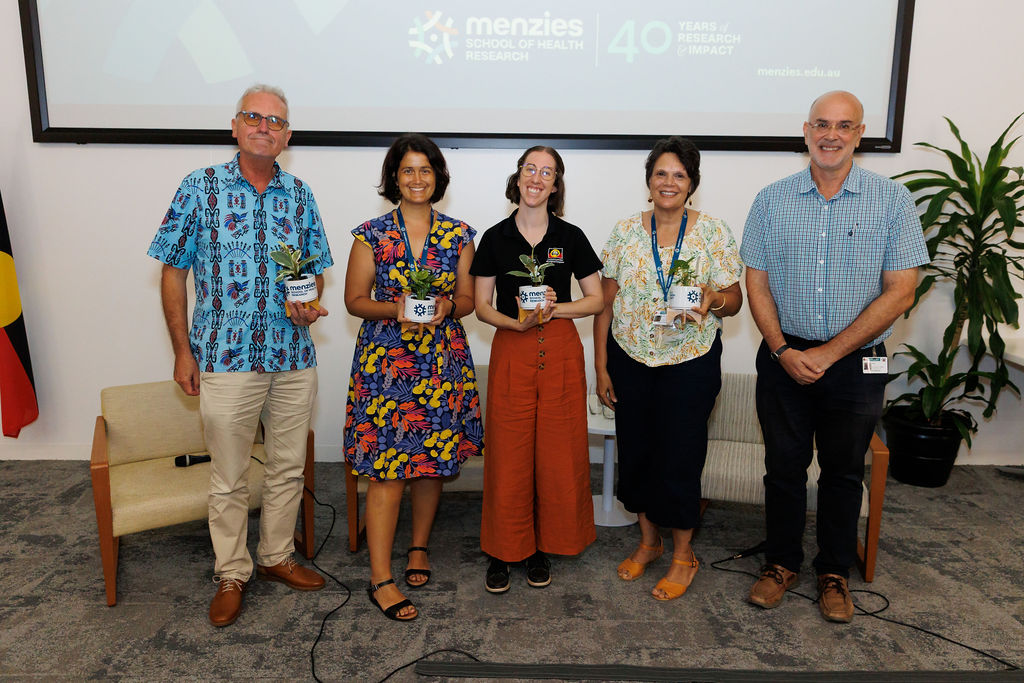
Menzies Partnerships Panel (Top - L-R): Prof Nick Anstey (Timika-Menzies Research Collaboration), Tara Dias (Menzies) and Laura Stuart (Central Australia Aboriginal Congress) for DIABETES Across the LIFECOURSE: Northern Australia Partnership, Dr Leisa McCarthy (CAAHSN & TEAHRA) and event MC, Prof Alan Cass.
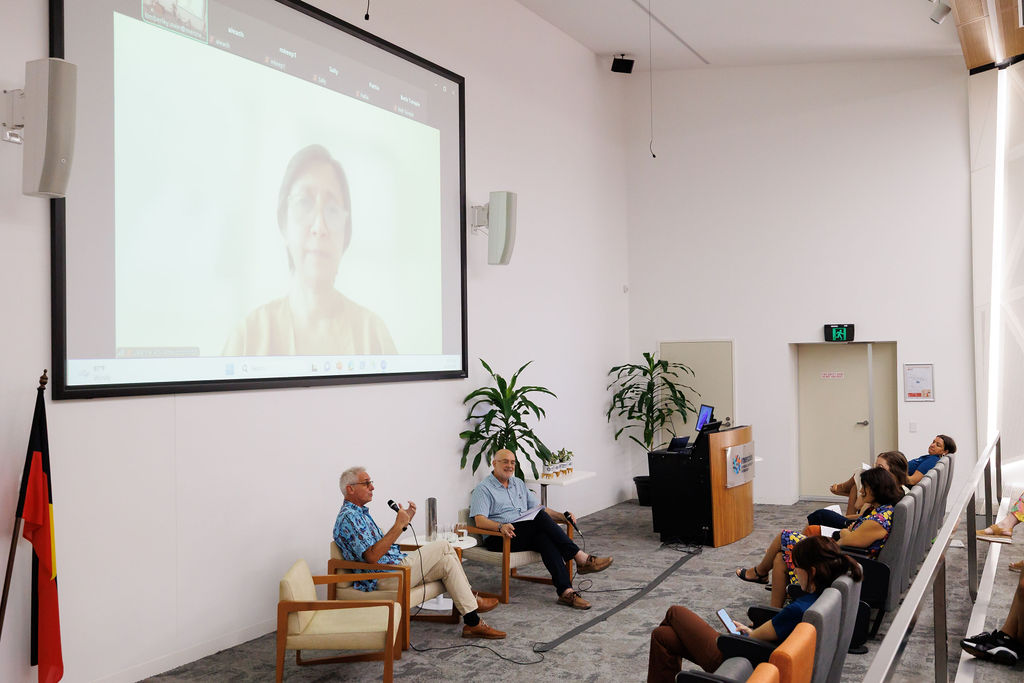
Dr Rini Poespoprodjo (online, Papuan Health & Community Development Foundation) and Prof Nick Anstey (Menzies) discuss the Timika-Menzies Research Collaboration with Prof Alan Cass.
Event 3: First Nations Leadership
Held during NAIDOC Week, the third event in our series looked to amplify First Nations voices and their leadership.
Led by Menzies Deputy Director First Nations Leadership, Mark Mayo, who reflected on his journey at Menzies, the session explored how leading through action can inspire change.
Panellists Norlisha Barlett, Karen McLean and Timmy Duggan shared what leadership looks like in practice - from elevating lived experience to supporting community-led research and creating safe spaces to support others to thrive.
Drawing on the 2025 NAIDOC theme The Next Generation: Strength, Vision & Legacy, they emphasised the importance of investing in young First Nations people to ensure strong representation and to support health outcomes into the future.
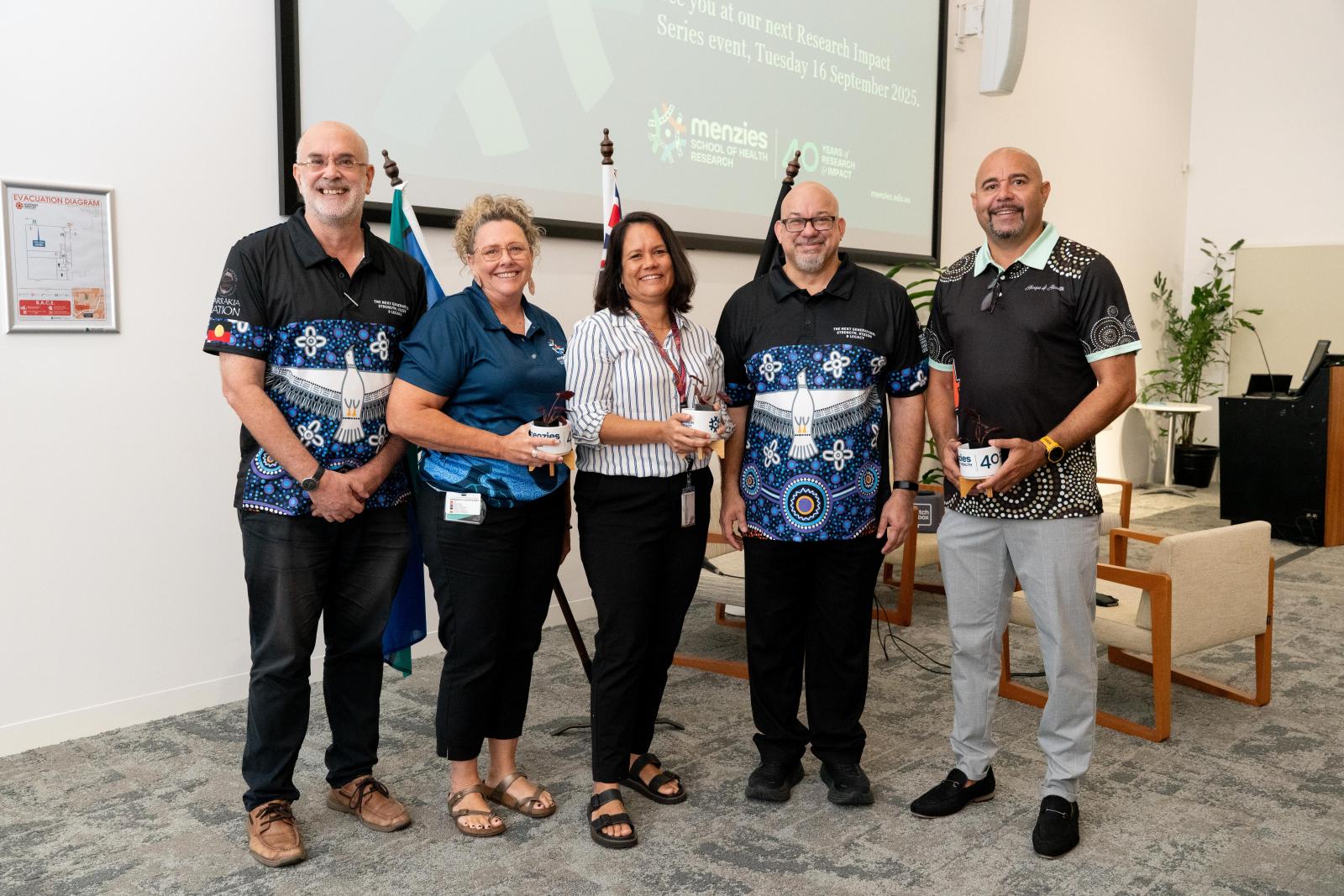
First Nations Leadership Panel (L-R): Prof Alan Cass, Karen McLean (Menzies Senior Policy & Governance Advisor) Norlisha Bartlett (DIABETES Across the LIFECOURSE: Northern Australia Partnership), Mark Mayo and Timmy Duggan (Founder of Hoops 4 Health).
Event 4: 40 Years of Laboratory Discovery
Our fourth event celebrated some of the scientific breakthroughs that have defined four decades of laboratory work at Menzies.
Professor Heidi Smith-Vaughan reflected on what makes the Menzies Lab extraordinary: from its skilled and collaborative team to its broad research capability, training culture, Biorepository and ability to adapt to technological change. She also reflected on her 35-year journey, offering a personal glimpse into how far we’ve come and how innovation continues to propel us forward.
Menzies researchers then shared and discussed their scientific discoveries. Dr Steven Kho discussed his groundbreaking malaria research and its implications for future prevention and treatment. Dr Nevio Sarmento shared insights from his work in Timor-Leste, spanning childhood vaccination research and the nation’s COVID-19 response. Dr Ella Meumann highlighted the long-running melioidosis research at Menzies and future work underway in tackling this complex tropical disease.
It highlighted that Menzies’ lab is more than a place of discovery. It is a hub for training, innovation, and solutions that improve health outcomes across the regions where we work
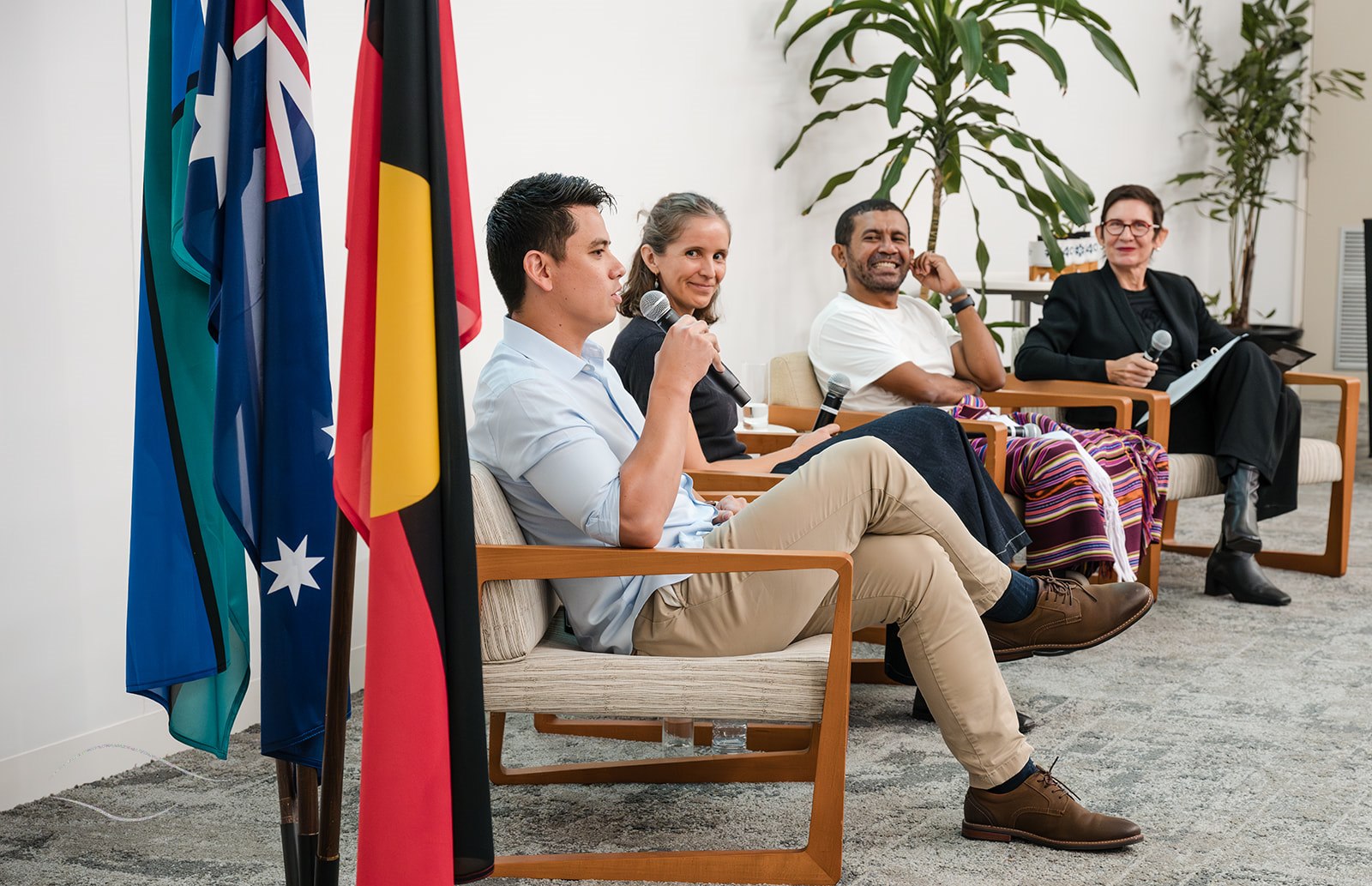
Laboratory Discovery Panel (L-R): Dr Steven Kho (malaria discoveries), Dr Ella Meumann (melioidosis research), Dr Nevio Sarmento (childhood vaccination and COVID-19 laboratory response in Timor-Leste) and event MC, Professor Heidi Smith-Vaughan.
Event 5: Research and Partnerships in Central Australia
Our final event in this series highlighted our long-standing work in Central Australia.
Led by Menzies Deputy Director First Nations Engagement and Research Strategy, Dr Leisa McCarthy, the event shared the evolution of Menzies research in the region, starting with infectious diseases and growing to include chronic conditions, environmental health and health systems strengthening.
Adjunct Professor John Boffa from Central Australian Aboriginal Congress reflected on our long running partnership and the power strong relationships have in driving meaningful change in health.
He then joined Yasmin Watts and Emeritus Professor John Wakerman from Menzies, along with Dr Liz Moore from AMSANT, for a rich panel discussion. Together they spoke about the importance of Aboriginal-led research, strong relationships, shared governance and flexible, community-driven approaches. They reinforced that research has greatest impact when it is grounded in community priorities and shaped by those it aims to benefit.
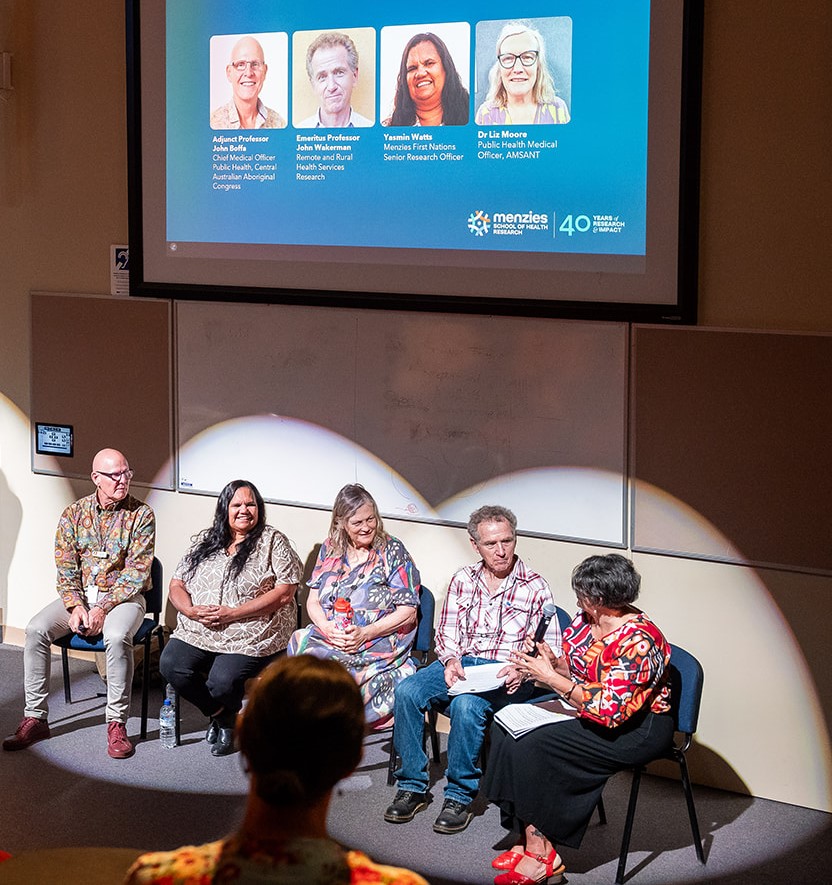
Research and Partnerships in Central Australia Panel (L-R): Adjunct Prof John Boffa (Congress Chief Medical Officer Public Health), Yasmin Watts (Menzies First Nations Senior Research Officer), Dr Liz Moore (AMSANT Public Health Medical Officer), Emeritus Professor John Wakerman (Remote and Rural Health Services Research) and event MC, Dr Leisa McCarthy.